
Get Your Brand Cited by ChatGPT, Gemini, and Perplexity
Be the answer in AI search. AEO/GEO strategies to earn citations from ChatGPT, Gemini, and more.
Have you noticed how your own search habits have changed lately? We certainly have, especially when looking for quick answers or local services here in Malaysia. Typing a query into Google now often feels like having a conversation with an assistant.
This massive shift is exactly why AEO & GEO (AI Search Optimization) is becoming the most exciting marketing evolution in years. Our founder, Adam Yong, started Adam SEO back in 2011 with a simple promise, knowing that search rankings alone mean nothing without tangible business results. Today, getting those results means appearing right where your buyers are making decisions.
The process of getting your brand cited by these new AI tools is actually quite straightforward.
We are going to walk you through the exact strategies that work for local businesses today. Grab a cup of coffee, and let’s go through it together.
Search is moving to AI answers
AI engines like ChatGPT, Gemini, Perplexity, and DeepSeek increasingly answer the questions your customers used to type into Google. Instead of a list of links, buyers get a synthesised answer. Our data shows that the brands cited in that answer win the attention and trust.
AEO & GEO (AI Search Optimization) makes your business one of those cited sources. The landscape is changing rapidly, with ChatGPT now holding a dominant 72.68% chatbot market share in Malaysia as of May 2026. We also monitor Perplexity closely, as it now captures nearly 6% of the local market and explicitly cites its sources.
“ChatGPT usage in Malaysia spiked by 330% over the last year, shifting discovery from traditional scrolling to direct conversational answers.”
Central Malaysia currently leads AI adoption with an impressive 78% usage rate. This means real people in Kuala Lumpur and Selangor are actively asking AI for local business recommendations. We added these strategies to our methodology in 2025, giving early-adopting clients a first-mover edge while competitors are still focused only on blue links.
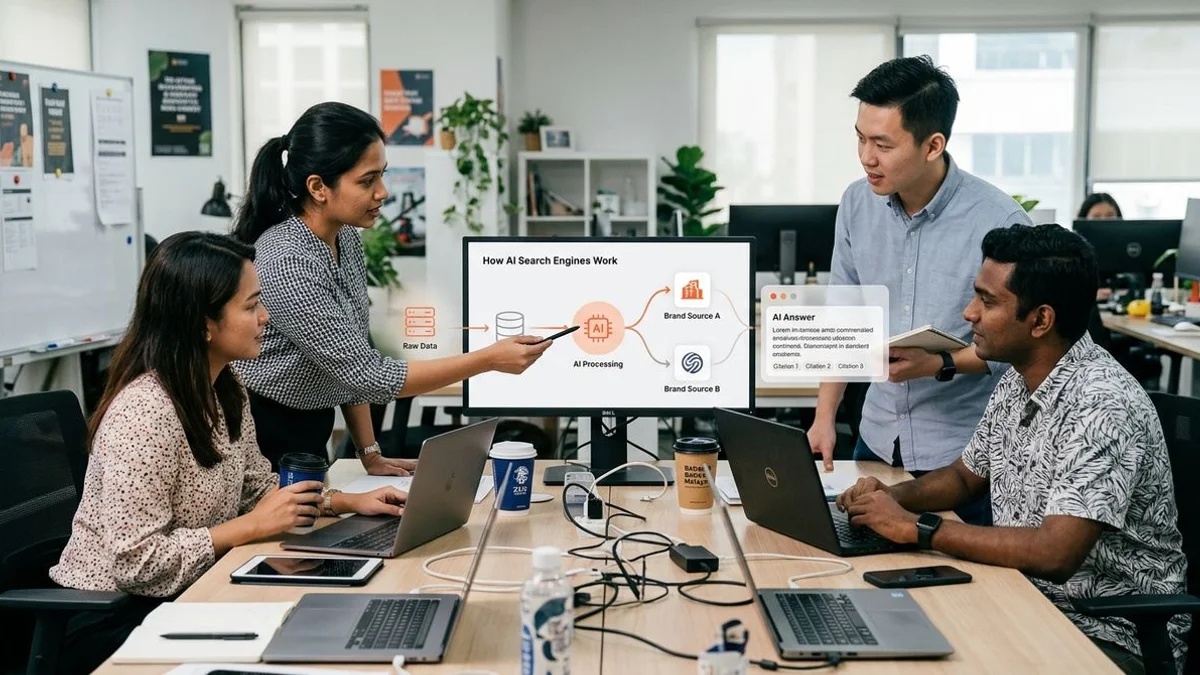
A recent 2026 industry report highlighted this massive behavioural shift. We use this insight to ensure your business becomes the direct answer to those local queries.
How we make your brand citable
Getting recommended by an AI requires a different approach than traditional keyword stuffing. Large Language Models (LLMs) need specific signals to understand and verify your business information. We focus on five core deliverables to turn your website into a highly credible source.
- Entity consistency: making sure your brand, services, and facts are described the same way everywhere the web (and AI) can find them. For Malaysian businesses, this means your Name, Address, and Phone number (NAP) must be identical across local directories to build a solid Knowledge Graph.
- Structured data: Organization, FAQ, Article, and LocalBusiness schema that helps machines understand and trust your content. Adding proper ProfilePage schema is now a critical technical requirement in 2026 for feeding real-time business details directly to algorithms.
- Citation-worthy content: clear, well-sourced, well-structured answers that LLMs prefer to quote. A great pro-tip is to place a clear, 100-150 word direct answer at the very top of your page, which makes it incredibly easy for Answer Engines to extract and synthesize.
- Multi-engine targeting: optimising for ChatGPT, Gemini, Perplexity, and DeepSeek, not just one. Google’s Gemini alone accounts for over 15% of the local Malaysian AI chatbot market, requiring specific formatting to trigger recommendations.
- AI-visibility monitoring: tracking where and how your brand appears in generated answers.
Implementing these steps ensures that algorithms view your company as an authority. Our clients often notice that perfectly formatted content naturally attracts more clicks from highly motivated buyers. This creates a powerful cycle of visibility and credibility.
Does this replace traditional SEO?
No, it extends it. The same foundations that earn Google rankings, like authority, clarity, and structured data, also make you citable in AI answers. We want to be clear that AEO and GEO build on a strong SEO base rather than replacing it.
This is why pairing this work with technical SEO and content strategy is so effective. Google AI Overviews now appear in over 30% of all search results. Our integrated approach ensures you capture traffic from both the classic links and the new generative summaries.
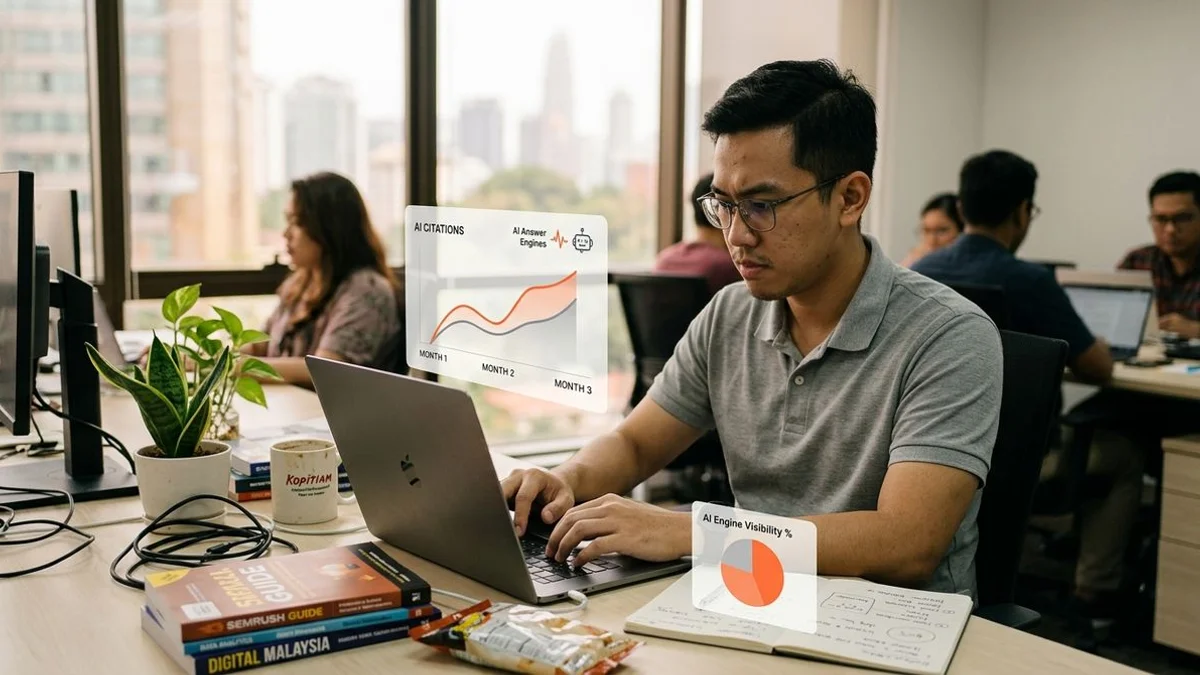
To make the distinction clearer, look at how these two strategies complement each other. A balanced digital strategy requires both. We use this framework to map out exactly where your budget will have the biggest impact.
| Feature | Traditional SEO | AEO & GEO |
|---|---|---|
| Primary Goal | Ranking high in list of blue links | Being cited as the source in AI answers |
| Content Focus | Keyword density and backlinks | Direct answers within the first 150 words |
| User Intent | Researching multiple options | Seeking a single synthesized recommendation |
The table above highlights why a dual-layered approach is essential for 2026. Ignoring either channel leaves valuable market share on the table. We highly recommend tackling the foundational technical elements first before moving to generative content.
Get ahead of AI search
The brands that establish AEO & GEO (AI Search Optimization) citations now will be hard to displace later. An early advantage directly translates into long-term market dominance. We offer a free discovery audit to map out your specific opportunities.
A quick assessment will reveal exactly where your AI visibility stands today. Request your audit, and let’s start building your future traffic pipeline. We are ready to help you capture this growing audience.
What clients say
“Moving onto AEO and GEO early was the right call. We're now being cited in AI answers our competitors don't even know exist.”
AI Search (AEO/GEO) — FAQs
What is the difference between AEO and GEO?
Is AI search optimization worth investing in now?
How do you measure results from AEO and GEO?
Related guides
In-depth answers to the questions clients ask about AI Search (AEO/GEO).
-
AEO and GEO vs Traditional SEO
AEO and GEO vs traditional SEO: the ranking model versus the citation model, where they overlap, what is genuinely new, and why you should do both.
-
How Structured Data Powers AI Search Visibility
How schema helps AI search: the key schema types, how LLMs use structured data, implementation basics, and the common mistakes that undermine it.
-
How to Get Your Brand Cited by ChatGPT and Gemini
Practical steps to earn AI-engine citations: entity and brand consistency, authoritative content, structured data signals, and monitoring AI mentions.
-
What Are AEO and GEO (AI Search Optimization)?
AEO and GEO explained: what Answer Engine and Generative Engine Optimization mean, how AI engines retrieve and generate answers, and how they relate to SEO.
-
Is AI Search Optimization Worth It for Malaysian SMEs?
Is AI search optimisation worth it for Malaysian SMEs? A look at adoption trends, the early-mover advantage, cost versus payoff, and who should prioritise it.
Ready to grow with AI Search (AEO/GEO)?
Request a free discovery audit and a revenue-based plan.