
Local SEO vs Organic SEO — What's the Difference?
Published 12 March 2026
We often hear clients asking about local SEO vs organic SEO, treating them as the exact same thing.
They overlap significantly, but they target different searches, appear in different places, and require completely different work. Understanding the difference local SEO brings to your strategy helps you spend your budget where it actually moves the needle. Our founder, SEO veteran Adam Yong, built Adam SEO in 2011 on the premise that search engine rankings are meaningless without tangible business results.
Both disciplines fall under the broader local SEO work we handle for area-based businesses. Knowing exactly which approach a specific query demands makes your strategy highly efficient. We recommend looking at the current data before making any major changes.
This simple analysis will show you how to combine both tactics for maximum visibility in Malaysia. Let us explore a few practical ways to respond to these search trends.
Intent differences
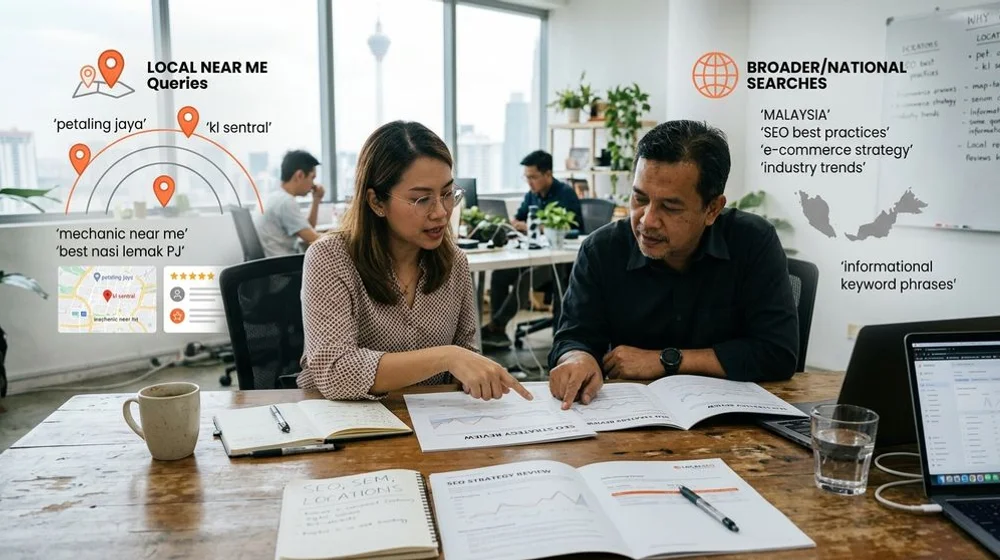
We define local searches as queries with strong geographic intent, meaning the user wants a nearby option and is usually ready to take action immediately. Organic searches are much broader, focusing on research, comparisons, and informational questions that are not tied to a specific physical location. Over 90% of Malaysians access the internet primarily via smartphones, which constantly feeds live GPS data into these search results.
Our strategy for capturing this traffic requires understanding bilingual search habits across the region. A user in Kuala Lumpur might search for a “running shop in Bangsar” or use a Bahasa Malaysia phrase like “kedai kasut berdekatan”. Both of these high-intent queries demand a highly targeted local SEO approach.
We tackle broader, informational queries with a completely different mindset. A search like “best running shoes for flat feet” requires deep organic content, clear comparisons, and expert reviews. Matching your content to the user’s immediate intent is the secret to winning the click.
| Feature | Local Search Intent | Organic Search Intent |
|---|---|---|
| User Goal | Immediate visit or call | Research and comparison |
| Query Example | ”Kedai kasut berdekatan" | "Best running shoes 2026” |
| Device Used | Mostly mobile on the go | Desktop or mobile |
Map Pack vs blue links
We know that local intent usually triggers the Map Pack, placing three map-based listings directly above the standard organic results. Organic SEO competes for the traditional blue links positioned below that map and across the wider results page. Earning a spot in the Map Pack relies heavily on your Google Business Profile, customer reviews, and physical proximity to the user.
Our research shows that Google’s 2026 updates have drastically changed this landscape. Recent data from Sterling Sky reveals that new AI Local Packs feature nearly 67% fewer unique businesses than the traditional three-packs. This shrinking visibility makes keeping your entity data accurate more critical than ever.
Understanding the 2026 CTR Shift
We track local vs organic search click-through rates constantly to understand where users actually go. Searchers click on Local Pack results heavily for service queries, while organic links capture the longer research phases. You can read exactly how to secure those local spots in how to rank in the Map Pack.
Our team builds content authority and strong on-page signals to secure those traditional blue links below the map. Comparing map pack vs organic performance shows that strong organic links still drive the majority of traffic for non-location specific research. You must optimise for two distinct ranking systems to capture the full market:
- Map Pack Signals: Proximity, review velocity, and Google Business Profile completeness.
- Organic Signals: High-quality backlinks, comprehensive site structure, and deep topical authority.
When each matters most
We prioritize local SEO for businesses that serve a physical area and depend heavily on foot traffic, direct calls, and direction requests. Organic SEO matters most for reaching people much earlier in their research phase and capturing searches that have no geographic angle. A neighbourhood dental clinic in Johor Bahru needs local visibility first to survive.
We recommend a broader approach for e-commerce stores or brands building a national reputation. These companies require massive organic content to guide buyers through complex comparisons before a purchase. Most Malaysian enterprises actually sit somewhere in the middle and require a blend of both disciplines.
Our experience shows that consumer habits in Malaysia demand this hybrid approach. A 2025 Vase.ai survey revealed that only 4% of Malaysians shop exclusively in physical stores today. The vast majority mix online research with physical visits, blending both search intents together.
We look at these specific business models to determine the primary focus:
- High Local Priority: Restaurants, auto repair shops, and regional service providers.
- High Organic Priority: Software companies, lifestyle blogs, and national e-commerce platforms.
- Hybrid Needs: Retail chains with physical branches and active online stores.
A clear understanding of your business model dictates where your initial marketing budget should go. The smartest brands dominate their specific niche before expanding into secondary search channels.
Combining both for full coverage

We see the strongest local businesses refusing to choose just one strategy. They win the Map Pack for high-intent local searches and rank organically for the informational questions surrounding their services. This dual approach covers the entire customer journey, from the very first question to the final ready-to-buy moment.
Our clients who integrate their digital and physical operations see the highest return on investment. Malaysia’s e-commerce market is projected to hit 23.5 billion US dollars by 2027, driven by shoppers who research online but often buy locally. Accepting popular digital payments like Maybank MAE or TnG eWallet at your physical store is a perfect example of this integrated mindset.
We strongly advise laying a solid foundation before chasing advanced tactics. If you are just getting oriented, start by understanding what local SEO is and build your strategy from there. Establishing that core visibility is the first step to dominating your local market.
Related service: Local SEO Services