
What Is Conversion-Focused Web Design?
Published 13 April 2026
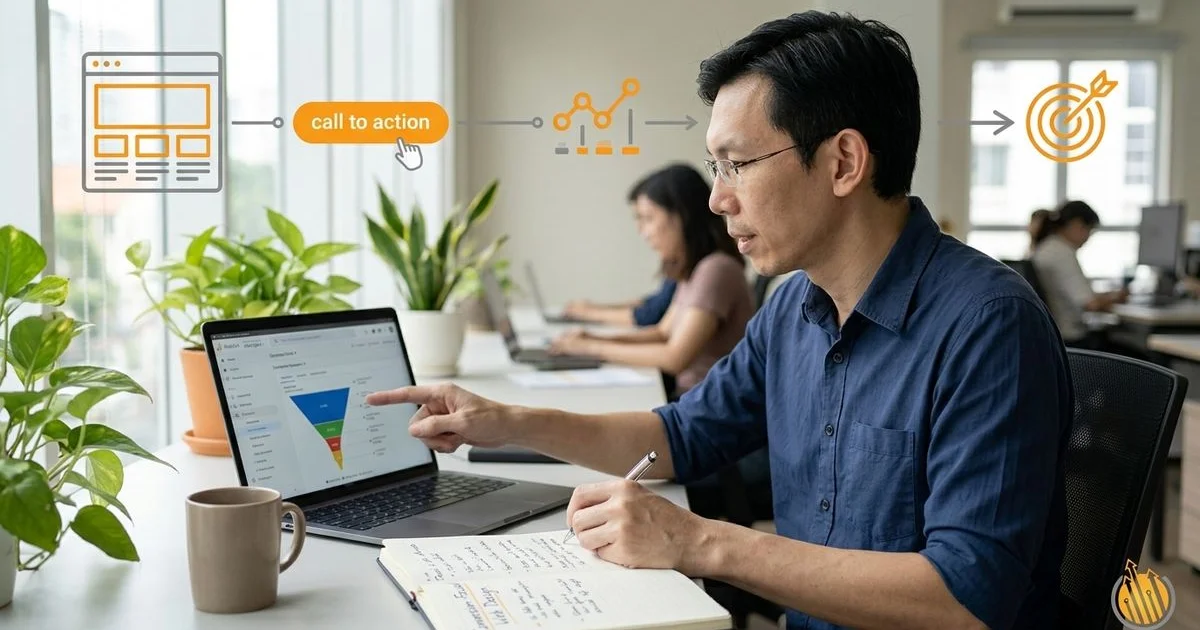
You already know how frustrating it is to launch a beautiful website, only to watch your analytics dashboard show zero new leads. Globally, the average ecommerce conversion rate in 2026 is sitting at a mere 1.9 percent.
Most of your hard-earned traffic is simply bouncing away.
We understand this struggle deeply. Founded in 2011 by SEO veteran Adam Yong, Adam SEO was built on the premise that rankings mean nothing without tangible business results.
This exact mindset drives our SEO web design service. Let’s look at the hard data behind conversion focused web design and explore the exact changes that will increase your revenue.
Definition and principles of conversion focused web design
Conversion-focused web design is a strategic layout approach. It actively guides a visitor to a specific business goal, such as making a purchase or submitting an enquiry. This conversion centred design prioritises user clarity and rapid decision-making over purely decorative aesthetics.
Our team always starts by mapping out the exact customer journey before touching any code. This upfront planning prevents costly redesigns later and ensures every page has a single, obvious purpose.
Many business owners mistakenly assume that adding more features will increase sales. The data tells a very different story. Recent 2026 figures from Forrester Research show that every single dollar invested in user experience returns up to a hundred dollars.
Core Conversion Principles
You can achieve this massive return by following four foundational rules:
- Make the next step obvious: Your primary button should stand out instantly.
- Remove friction: Eliminate unnecessary form fields and required account creations.
- Build instant trust: Display local Malaysian phone numbers and verified client reviews.
- Prioritise page speed: Keep load times under three seconds to prevent high bounce rates.
Every element on your screen must either help the visitor take action or get out of the way entirely.
UX-to-conversion design
Good user experience directly translates to higher conversions. It removes the confusion that causes visitors to abandon their journey.
A clear structure and logical flow help potential customers find exactly what they need immediately.

The Cost of Clutter
We frequently see beautiful local websites fail simply because their navigation is too complex. Shoppers will not waste time hunting for a contact button or a pricing page.
Google researchers have found that users form a firm opinion about a website in just 50 milliseconds. If your layout is cluttered, they will leave and visit a competitor.
Confusion is always the enemy of a high converting website. You must design the entire customer journey rather than just decorating isolated pages. Think carefully about where a specific visitor lands and what pressing question they need answered.
Comparing Design Approaches
| Feature | Traditional Web Design | UX Conversion Design |
|---|---|---|
| Primary Goal | Visual appeal and branding | Generating leads and sales |
| Navigation | Complex, multi-level dropdowns | Streamlined, goal-oriented menus |
| Mobile Focus | Responsive as an afterthought | Mobile-first checkout flows |
A 2026 industry report confirms that 88 percent of users will never return to a site after a single frustrating experience. Make their path to purchase absolutely effortless.
CTA placement and trust
Placing clear calls to action (CTAs) in natural decision-making spots is highly effective. It is the most reliable way to turn a browser into a buyer.
Combining these visible buttons with strong trust signals removes the final hesitation before a purchase.
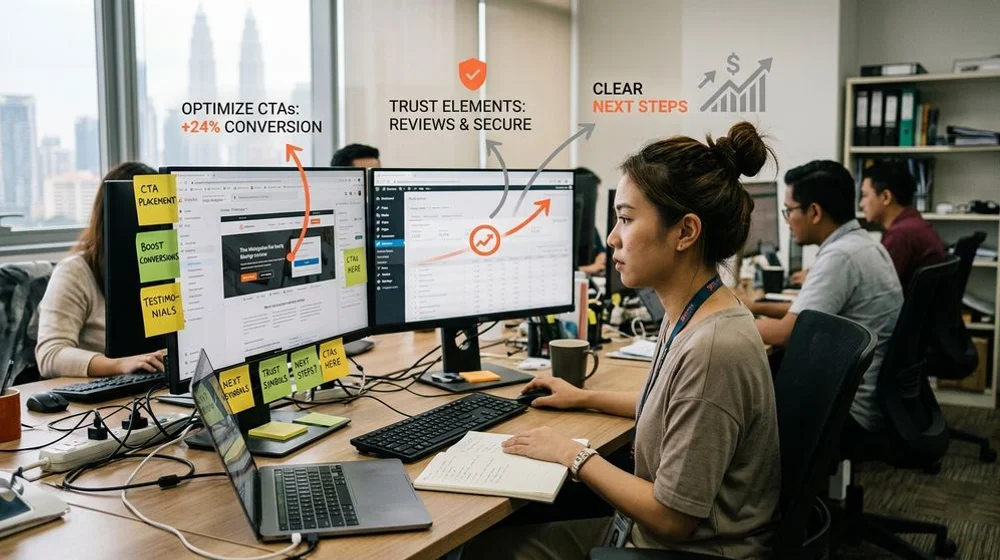
Your prompts to act should be prominent and located exactly where a visitor feels ready to engage. Do not bury your most important contact form at the very bottom of a lengthy page.
We recommend assigning only one primary action to each specific page. Competing buttons will fight for attention and quickly paralyse your user.
Trust elements are equally vital for regional SMEs trying to compete with massive global brands. People will only hand over their credit card details when they feel completely secure.
Essential Trust Signals
- Verified Reviews: Authentic customer feedback provides powerful social proof.
- Clear Guarantees: Money-back promises reduce the perceived risk for new buyers.
- Local Contact Details: A physical address in Malaysia reassures shoppers that you are a legitimate business.
- Security Badges: SSL certificates and payment logos show that transactions are encrypted.
Adding these credibility markers makes a massive statistical difference to your bottom line. Recent 2026 data from WordStream reveals that active interaction with customer reviews can boost conversion rates by a staggering 102 percent. People convert rapidly when they believe in your brand and the checkout path is clear.
SEO compatibility
Conversion-focused design and search engine optimisation work together perfectly to drive profitable traffic. Search algorithms actively reward websites that provide a fast, structured, and user-friendly experience.
Treating marketing and usability as a trade-off is a major mistake. A clean architectural structure helps human visitors find products quickly. It also allows Google bots to crawl your content efficiently.
The Speed and Search Connection
Our developers focus heavily on technical performance because speed impacts everything. A slow site will destroy your search rankings and instantly kill your sales momentum.
According to 2026 data from Portent, business websites that load in just one second convert up to three times higher than those taking five seconds to render. Every additional second of delay costs you real Malaysian Ringgit.
You can improve both metrics by focusing on three key areas:
- Core Web Vitals: Google uses specific speed and stability metrics as direct ranking factors.
- Bounce Rate Reduction: Faster pages keep users engaged longer, signalling high quality to search engines.
- Mobile Indexing: Responsive, fast-loading mobile designs are critical for regional visibility.
Done correctly, smart UX design lifts your enquiry volume and supports your organic rankings simultaneously. The technical foundation required to achieve these lightning-fast load times is fully covered in our detailed guide on website speed, SEO, and conversions.
If you are ready to stop losing traffic and start generating real leads, conversion focused web design is the answer. Contact Adam SEO today to schedule a comprehensive audit of your current site layout.
Related service: SEO Web Design