
WooCommerce vs Shopify for SEO
Published 26 March 2026
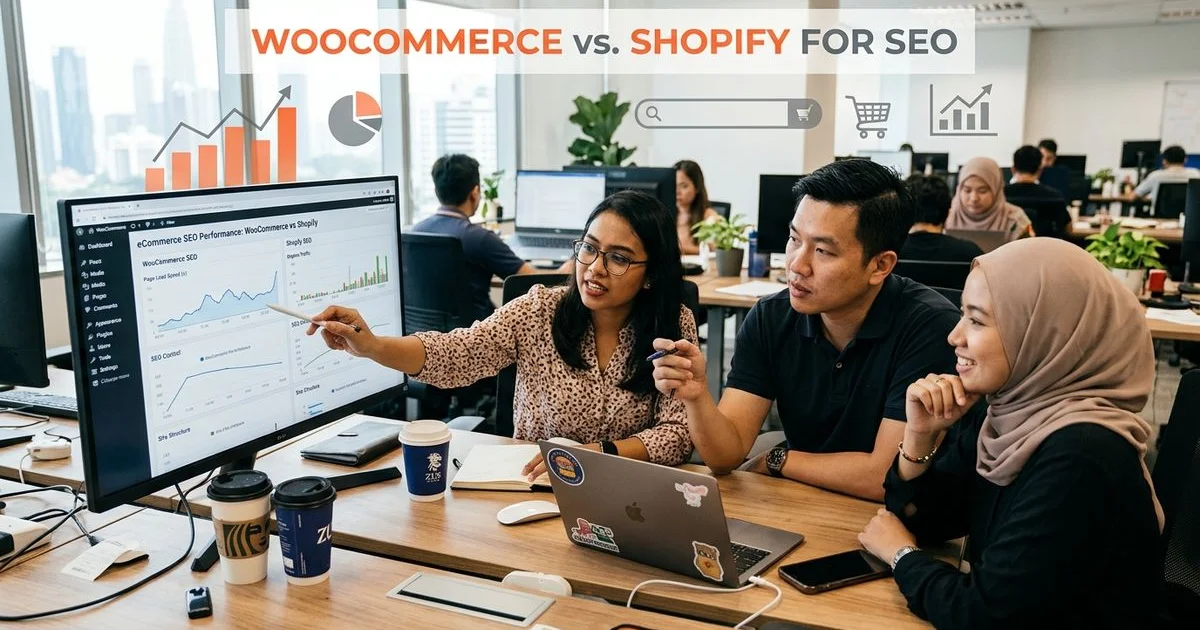
We frequently hear Malaysian business owners asking about woocommerce vs shopify seo for their digital storefronts. Since Adam Yong founded Adam SEO in 2011, our agency has focused on tangible business results rather than just vanity metrics. This common dilemma usually boils down to balancing absolute technical control against streamlined simplicity.
We know that the foundational principles of e-commerce SEO apply equally to either choice. The specific platform simply dictates how you manage the underlying technical details. Whether you are researching shopify or woocommerce seo, both systems can achieve excellent search rankings.
We will explore the key factors to help you make an informed decision.
Let’s outline the exact technical differences that affect organic visibility.
URL control and flexibility in WooCommerce vs Shopify SEO
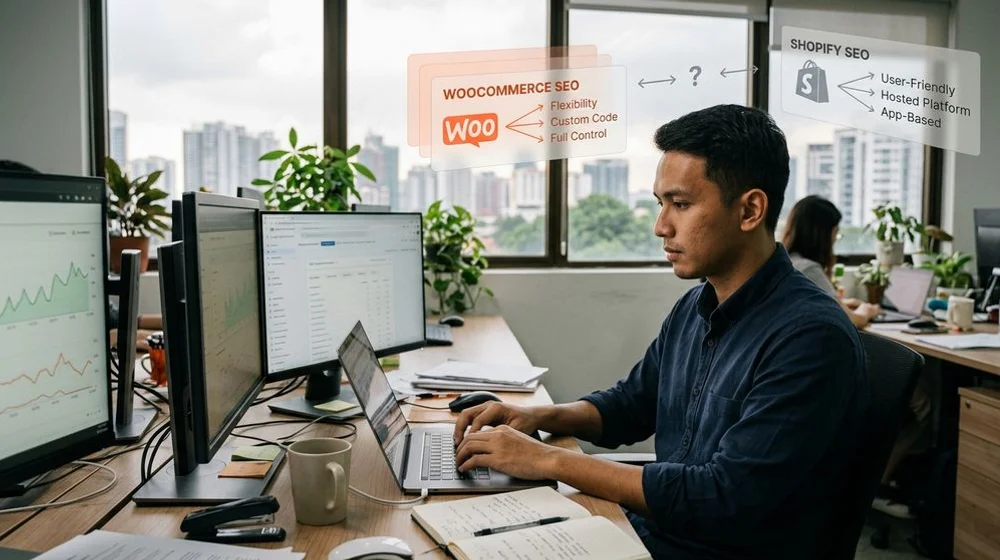
We always check URL structure first during an audit because it directly impacts how search engines crawl a site. WooCommerce clearly wins this category by offering near-total control over your permanent links. WordPress powers WooCommerce, giving you the freedom to strip out unnecessary category bases for a clean product path.
We find Shopify much more rigid by comparison. The platform forces specific folders into your URLs, meaning that same shoe product must sit at yourstore.com.my/products/mens-shoes/. Creating collections generates duplicate paths like /collections/mens/products/mens-shoes/, which requires careful canonical tag management.
We cover these specific constraints and how to handle them in the Shopify SEO checklist. Business owners who want a clean, custom URL structure will prefer WooCommerce. Compare how each system handles URLs in this quick breakdown:
| Feature | WooCommerce | Shopify |
|---|---|---|
| Default Product URL | Customisable | Forced /products/ folder |
| Category URL | Customisable | Forced /collections/ folder |
| Duplicate Paths | Rare | Common with collections |
Site speed considerations
We prioritise page speed because a 2026 Google and Deloitte study shows every 0.1-second improvement increases retail conversions by 8%. Shopify provides a reliable baseline since it operates on a fully hosted global network. You do not have to worry about server maintenance or caching configurations.
We do warn clients that heavy themes or too many third-party apps will still drag down a Shopify storefront. The situation changes entirely when evaluating WooCommerce. Performance relies heavily on your chosen hosting provider, theme weight, and plugin stack.
We often see Malaysian stores hosted on cheap shared servers struggling to pass Core Web Vitals. You have the ceiling to make a WooCommerce store lightning-fast with premium local hosting, but poor maintenance will cause severe slowdowns. Track these specific speed metrics regardless of your platform choice:
- Largest Contentful Paint (LCP): Keep this under 2.5 seconds for your main product images.
- Interaction to Next Paint (INP): Ensure add-to-cart buttons respond in under 200 milliseconds.
- Mobile Load Time: Smartphones drive over 72% of Malaysian e-commerce transactions in 2026.
Schema flexibility

We consider structured data essential because Google requires valid Product schema to display rich results like price and reviews. WooCommerce provides far more flexibility for implementing and customising these detailed tags. Plugins and direct theme access give you complete freedom to map out complex product attributes.
We regularly use the popular Rank Math plugin because it includes comprehensive WooCommerce schema capabilities entirely for free. Shopify supports basic schema out of the box. Customising those tags usually requires editing Liquid theme code directly or paying for dedicated apps.
We advise store owners who want fine control over rich snippets to choose WooCommerce. Most standard retail operations find the default Shopify options perfectly sufficient for basic product listings. Compare the schema capabilities based on these critical features:
| Feature | WooCommerce | Shopify |
|---|---|---|
| Basic Product Schema | Yes (via free plugins) | Yes (built-in) |
| Advanced Customisation | Full code access | Requires Liquid edits or apps |
| Cost for Rich Snippets | Often free (Rank Math) | Usually requires paid apps |
Scalability and migration
We look closely at scalability since Malaysia’s e-commerce market revenue is projected to exceed USD 13 billion in 2026. Shopify handles massive traffic spikes smoothly without requiring any infrastructure adjustments from your team. This automated scaling appeals heavily to business owners who prefer to focus entirely on selling.
We know WooCommerce scales just as well, but your server capacity strictly dictates that limit. Store owners must upgrade to premium managed hosting to survive major traffic events like the 11.11 mega sale. Moving between these platforms later requires extreme caution.
We always emphasise that careful redirect mapping and URL planning are essential to preserve your existing search rankings. A botched migration with broken links can drop your organic traffic overnight. Review these key areas before planning any platform switch:
- URL mapping: Match every old page to a relevant new destination.
- 301 redirects: Implement permanent redirects to pass existing search value.
- Data transfer: Ensure product descriptions, meta tags, and images move cleanly.
We base the final decision on woocommerce vs shopify seo on three main factors. Your team size, technical budget, and desire for control will reveal the best ecommerce platform seo choice for your business. Take the time to evaluate your internal resources before making a commitment.
We are always ready to help map out a technical strategy for your next digital storefront. Contact our team today to get started.
Related service: E-commerce SEO Services